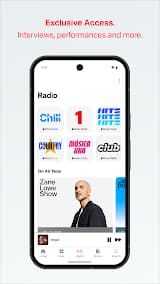
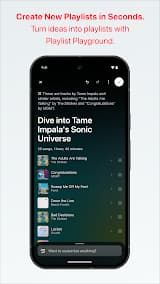
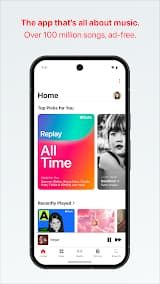
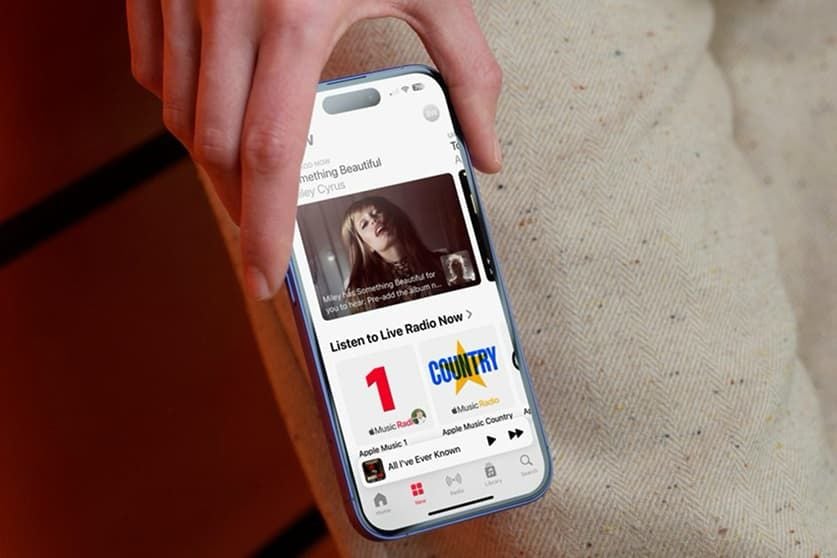
Apple Music is, without a doubt, the cleanest music app. No comments section. No in-app store. No pop-up ads. Just music.
The interface is stunning. The playback screen adapts its background color from the album artwork, lyrics fade in and out with a beautiful motion blur, and the dynamic album covers cover the entire status bar — it feels seamless, not gimmicky. Apple's design DNA is everywhere, and it shows.
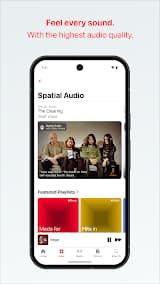
Lossless Audio & Spatial Audio are real game-changers. If you listen to the same track on Spotify and Apple Music side by side. The difference in clarity is unmistakable. Spatial Audio makes you feel like you're sitting in the front row of a concert.
The "For You" recommendations are eerily accurate. Unlike other services that throw everything at the wall, Apple Music's curated playlists — especially those hand-picked by music editors — actually understand what I want to hear next. This is the service's biggest competitive moat.
The album-first logic is both a strength and a weakness. Apple Music treats albums as the primary unit, not individual songs. Adding a single track to your library requires extra taps, and you can't batch-add songs — you do them one by one. If you're migrating from Spotify with a 2,000-song playlist, prepare for a painful manual process. There's no playlist import from other services.
Apple Music is the most respectful music app on the market. It treats music as an art form, not an ad platform. The $10/month price tag is justified by the audio quality, the absence of ads, and the depth of curation. Just be ready to relearn how you organize music.








 Install Latest APK
 Check historical versions