Within the domain of digital utilities, only a handful have achieved ubiquity or placed themselves in such an indispensable position as Google Maps. Since its launch, it has morphed from a basic web mapping service into an incredibly robust location intelligence platform that lives on billions of smartphones. Google Maps has been my navigation system of choice when it comes to everything — daily commutes, international travel and local discovery, so it's clear this software is more than a simple tool; for better or worse Google maps are part of the infrastructure through which modern life flows.
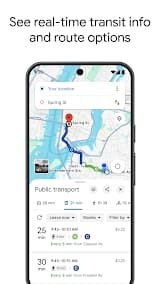
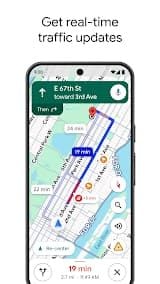
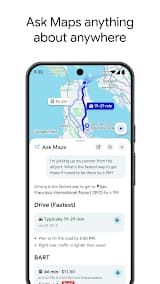
Routing is the core strength of Google Maps. The app features real-time traffic data with stunning accuracy, and dynamically recommends alternate routes to avoid delays. In dense urban jungle maze streets or a highway system, the voice navigation is complete and accurate. The Lane Guidance integration is perhaps the most admirable in that it shows a little arrow indicating which lane to be in for those planned need-to-turn-moments, reducing driving anxiety when navigating new areas immensely.
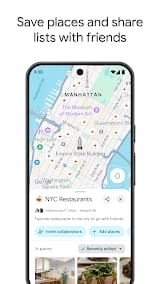
Google Maps has made the leap as a local discovery "super app." Easily discover restaurants, gas stations and sights. User-generated content like photos, reviews, and ratings adds a level of social proof that simply cannot be matched when it comes to making decisions. Tools such as "Popular Times" allow users to have an idea of the busyness level, a predictive add-on approach.
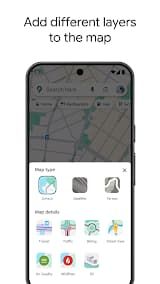
Even with all its dominance, the user experience is was never seamless. The interface may sometimes (and I mean less often but still) feel a little cluttered with sponsored pins and ads, hindering the clarity of your map. The satellite view is also great but 3D rendering can be hit or miss in some developing areas as well. That said, however these are minor squabbles in light of its overall usefulness.



 Install Latest APK

 Check historical versions